
Digital Marketing Trends 2026
Over the past few months, Sandford’s digital team has been gathering insights from leading voices across the industry to pinpoint the digital marketing trends set to shape 2026. The year ahead promises plenty of momentum, bringing fresh opportunities and new challenges for marketers.
In this article, we’ve distilled the most relevant predictions from across the digital landscape, with a focus on the platforms driving B2B and B2C performance - Instagram, LinkedIn and Pinterest. You’ll find practical takeaways on evolving audience expectations, platform updates, AI applications, and innovative ways to build an engaged community that strengthens long-term impact across channels.
Use this as your go-to reference for 2026: save it, revisit it, and draw on it to shape campaigns, content planning and multi-channel strategy. And if you’d like a hand turning these insights into action, we’re here to help you navigate what’s next with clarity and confidence.
Instagram prioritises visual storytelling, AI integration and much-sought-after authenticity
Instagram enters 2026 with a sharpened focus on AI-driven content discovery, polished yet human storytelling, and increased transparency tools for creators and brands.
The platform has already begun rolling out stricter ‘AI-generated’ media labelling and continues to experiment with a Reels-first app experience, particularly following the launch of Adam Mosseri’s standalone app, Edits. Content creators are encouraged to use this complementary tool to enhance their content creation experience. Mosseri has also emphasised that the app is designed to enhance reach and visibility. Together, these developments point to a deliberate shift toward short-form video as the default entry point on Instagram.
For B2C marketers, Instagram remains a powerhouse, particularly in retail, lifestyle and consumer goods, where Reels, Stories and user-generated content continue to deliver strong performance. While the platform is widely recognised as a source of inspiration, it is equally important to acknowledge that consumers frequently use social media to voice criticisms. Cultivating brand value through thoughtful engagement in comments and reactions is a crucial consideration that should not be discounted.
In the B2B space, Instagram continues to play a key role through employer branding, visual case studies and thought leadership presented in approachable, digestible formats. However, according to Brandwatch, in 2025, brands accounted for a minimal share of brand-related conversations online, an observation that encapsulates the widening trust gap between marketers and their audiences.
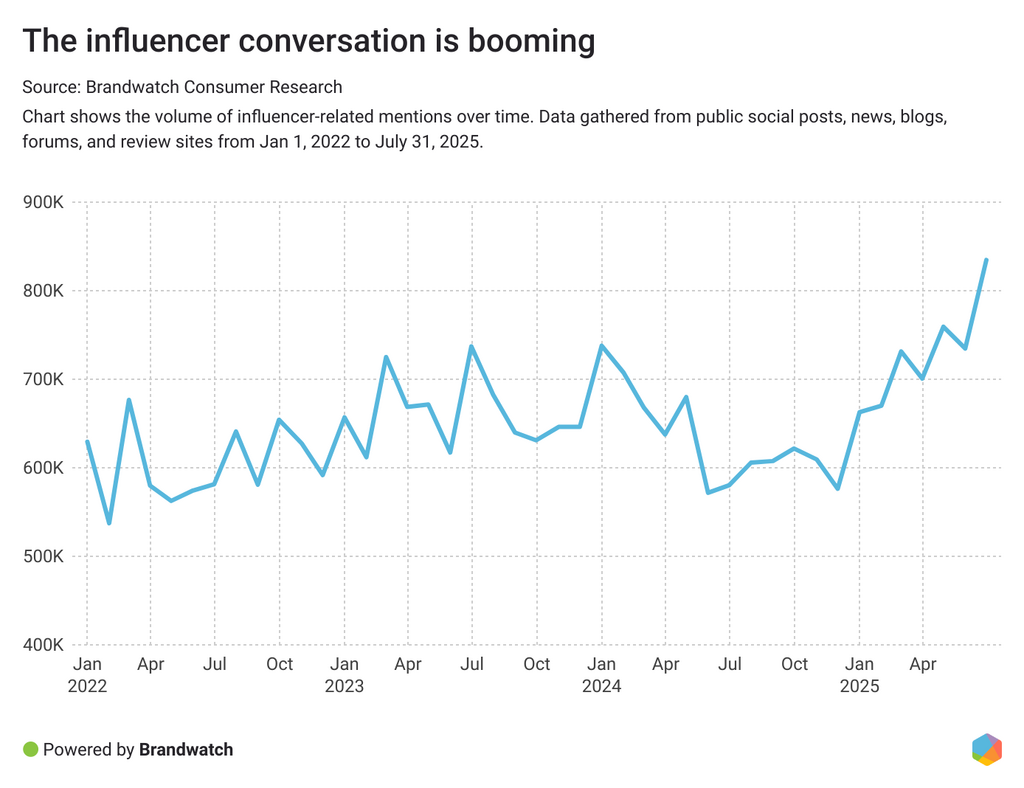
Brandwatch, The State of Social 2026. 2025, online source.
And which category is best positioned to bridge this gap? You guessed it, influencers! Whether developing a community for leisure or for professional purposes, influencers have long maintained a seat at the table. Projections for the category suggest influencer marketing is likely to surpass traditional media in revenue, and, confirming these forecasts, many consumers admit to making purchases based on influencer recommendations. Yet, the growing demand for authenticity means that brands must approach this channel with care, as misaligned or inauthentic messaging could backfire.
Brands should therefore gauge what kind of storytelling they are willing to disseminate across the digital space to represent them. Whether it is influencers, founders leveraging their personal brand to strengthen sentiment around their brands, or long-term partnerships, the online space will reward voices that are transparent and trustworthy.
Worthy of mention for the B2B category is the recently introduced Competitive Insights on Instagram, which allows Professional accounts to compare follower growth and posting frequency against up to 10 competitors. While useful for high-level benchmarking, it lacks deeper engagement analytics, such as clicks, shares, views and saves, and therefore must be supplemented by traditional insights tools for meaningful strategy.
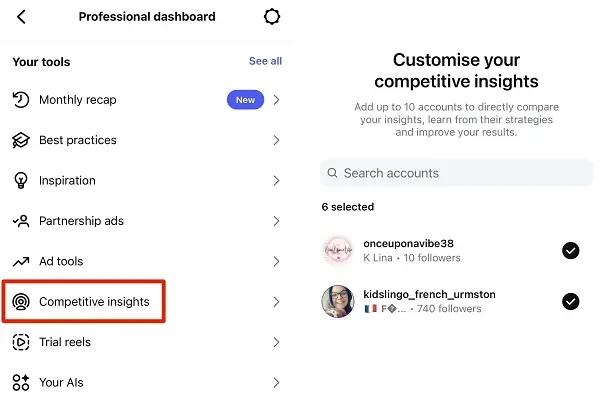
Social Media Today, Instagram Adds Competitor Insights for Professional Accounts, 2025, online source
LinkedIn doubles down on AI-powered features and high-trust content for B2B audiences
LinkedIn continues its rise as the premier platform for B2B marketing and will see some of its most significant evolutions in 2026.
On the path to becoming more akin to image-led platforms like Instagram, video on LinkedIn has become a key engagement driver, with video watch time up 36% year-over-year in the app. Unsurprisingly, video posts are on average being shared 20x more than any other content type.
To increase its competitive edge, this digital channel is also preparing to deploy a TikTok-style short-form video feed, a suite of AI-driven features, including improved analytics for creators, and a new in-stream virtual assistant known as Inbot, an AI tool capable of helping users optimise profiles, discover opportunities and manage communications.
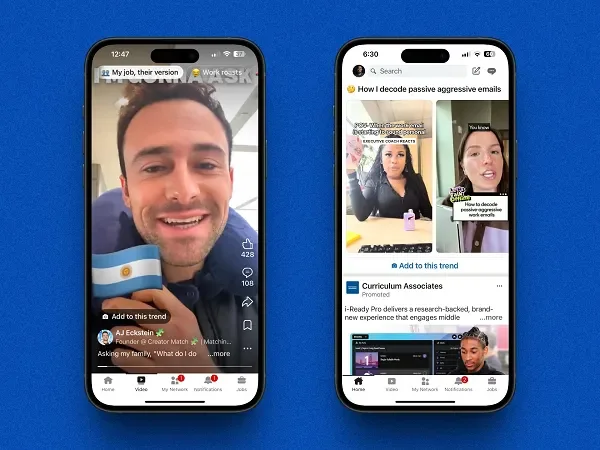
Social Media Today, 36 Predictions for Social Media Marketing in 2026..
With trust declining across the digital landscape, partly fuelled by rising ad fatigue (54% negative sentiment) and the surge in deinfluencing-led narratives (+79%), LinkedIn’s reputation for professional integrity sets it apart. This places high-value educational content, transparent storytelling and data-backed thought leadership in high demand.
For B2B brands, LinkedIn remains the most effective space for webinars, case studies, industry commentary and employee-driven advocacy. For B2C, while the platform is not a primary reach channel, it nonetheless supports founders’ personal brands, customer trust building and executive-level influence.
Looking ahead to 2026, AI will be central to visibility and engagement. LinkedIn’s recommendation engines are increasingly powered by machine learning, which means that brands providing insight-rich, niche-specific and genuinely valuable content will outperform those pushing promotional messaging.
Pinterest mixes AI-filtered inspiration and one-click commerce for B2C dominance
Pinterest’s trajectory into 2026 revolves around AI moderation, frictionless shopping and high-quality, aspirational visual discovery. As 2025 comes to a close, the platform has already begun cracking down on AI-generated imagery through advanced detection and labelling systems to maintain aesthetic integrity and user trust.
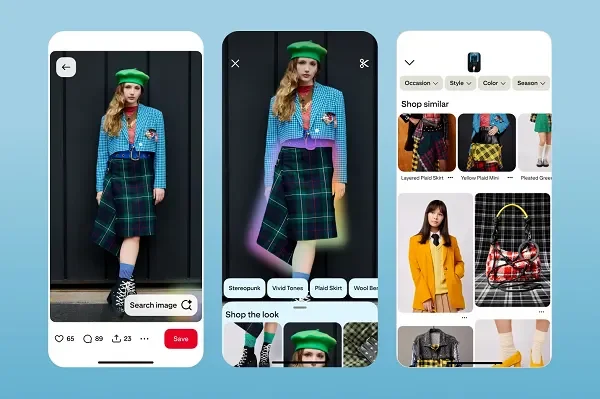
Social Media Today, 36 Predictions for Social Media Marketing in 2026
Pinterest is also moving closer to seamless one-click shopping, with expanding e-commerce partnerships, potentially including larger integrations with Amazon, to turn inspiration into instant conversion (Social Media Today, 2026).
For B2C brands, Pinterest remains one of the highest-intent platforms in the digital ecosystem. Users arrive to plan purchases, discover home decor ideas, compare design trends, explore architecture concepts and curate lifestyle inspiration. This makes Pinterest exceptionally powerful for brands in interiors, lifestyle, retail and so on. For B2B, while the platform plays a lesser role, there are growth opportunities in architecture, design services, sustainability-focused brands and niche professional inspiration verticals.
The integration of AI improves recommendation accuracy, enabling more personalised content distribution. For marketers, 2026 success relies on producing high-quality imagery, adhering to AI content policies, providing clear purchase pathways, and maintaining a consistent design aesthetic that aligns with user discovery patterns.
Pinterest Predicts: Themes worth watching in 2026
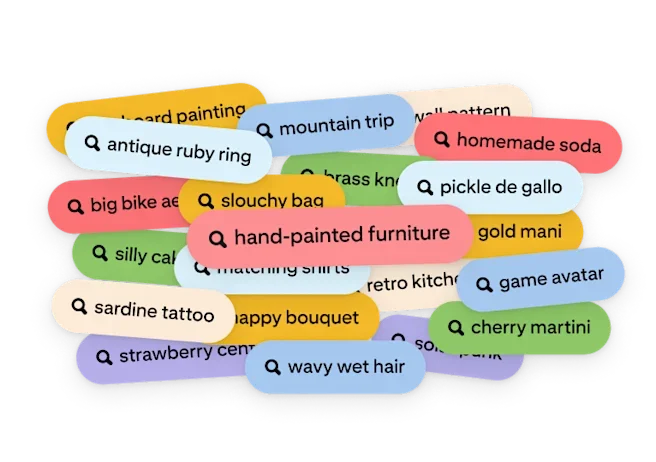
Another crucial resource for marketers is Pinterest Predicts, the platform’s trend report built entirely on rising search patterns. These themes are consistently accurate and offer an early look at cultural and aesthetic shifts for the year ahead. While each prediction must be adapted to your brand’s tone of voice and visual identity, these insights are invaluable for shaping forward-looking content.
Pinterest Predicts launches on 11th December 2025, so be sure to check back here for further updates as soon as we have them.
Secondary platforms to keep ON your radar
While Instagram, LinkedIn, and Pinterest drive the most strategic value for the majority of brands, several secondary platforms are worth monitoring, each playing a supporting role depending on audience needs and multi-channel strategy.
TikTok: Dominates B2C short-form video and livestream shopping; B2B presence is growing.
YouTube: Essential for both B2B and B2C through long-form education, demos, case studies, and evergreen content.
Meta/Facebook: Still powerful for older demographics, community groups, events and marketplace experiences.
Threads: Predictions see this platform become the leading real-time social network, beating X for total users (400 million actives).
So what should marketers prepare for in 2026?
As the digital landscape evolves, several themes shape the strategic priorities for 2026. AI is now embedded across all major platforms as a practical tool guiding content discovery, moderation, analytics and workflow efficiency.
Trust is the currency of digital marketing: transparency, authenticity and human-first storytelling outperform promotional noise as consumers grow more sceptical of ads, hidden fees and over-curated content. Platforms such as Instagram emphasise polished creativity, LinkedIn prioritises insight and professionalism, and Pinterest accelerates frictionless shopping and visual inspiration, all while tightening AI governance.
To build an effective 2026 strategy, marketers must embrace multi-channel efficiency, invest in high-value content tailored to platform expectations, integrate AI thoughtfully and stay grounded in real user behaviour rather than hype. Digital platforms will reward the brands that balance, not only juggle, strategic creativity and credibility, AI innovation, and human connection across an increasingly diverse digital ecosystem.
