
Clerkenwell Design Week 2026: What We Saw, What We Learned
Fifteen Years In - Does the festival continue to evolve?
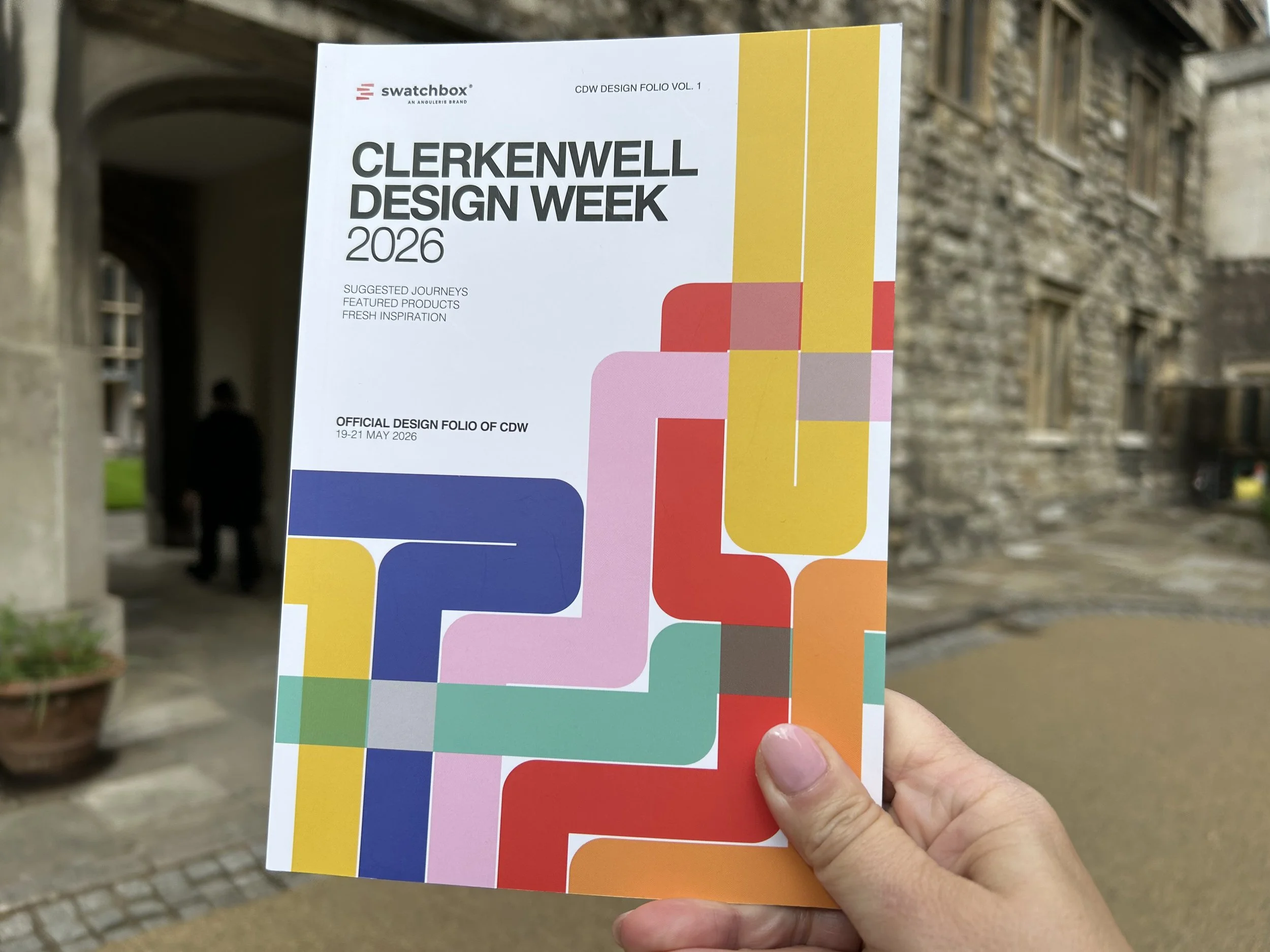
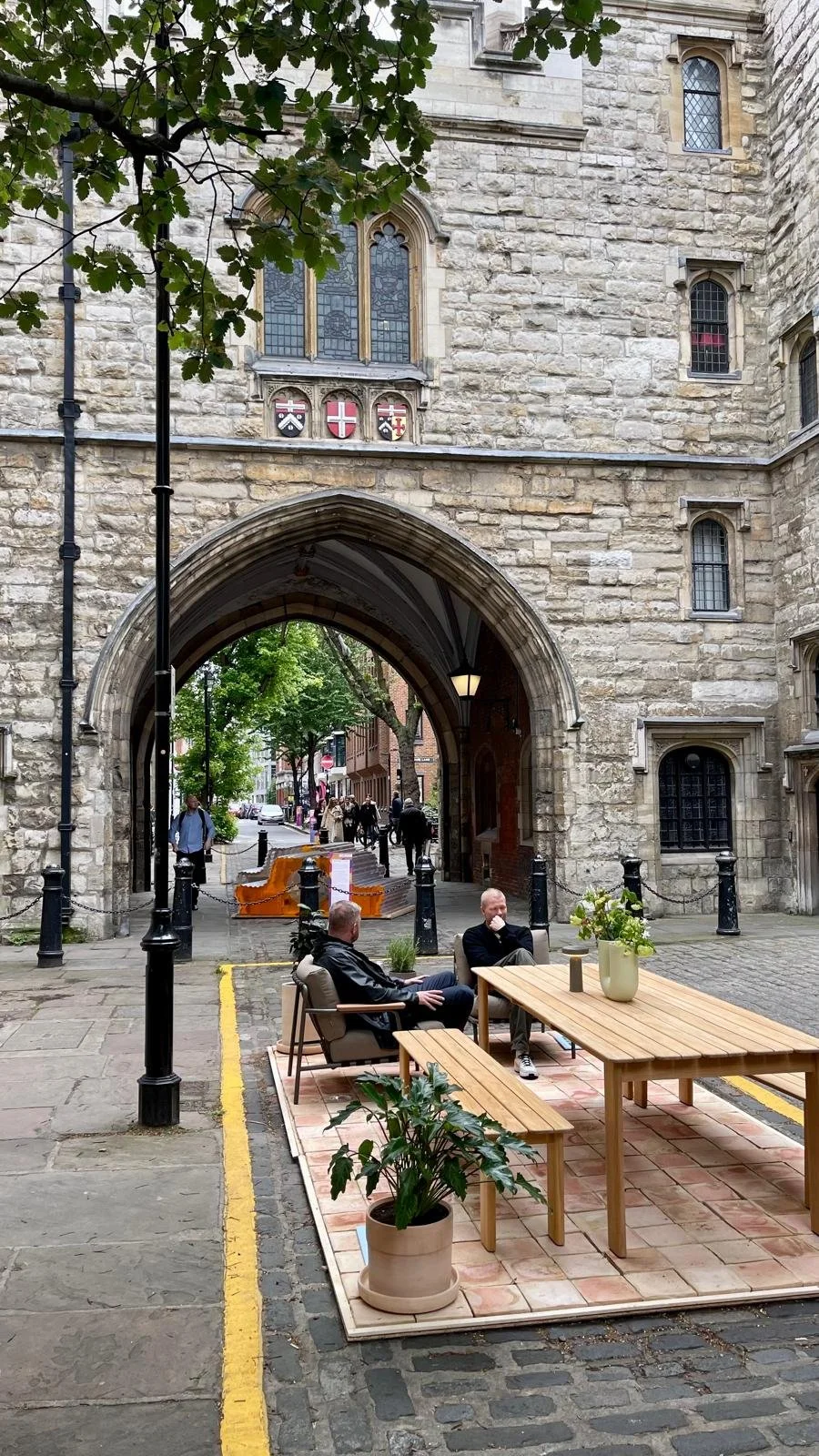
This year marks the 15th edition of Clerkenwell Design Week, and the festival is wearing its age well. EC1 was as buzzy as ever across the three days: showrooms with increasingly considered programmes, a stronger venue lineup than previous years, and the kind of density of conversation that reminds you why this postcode matters to the design world. One landmark installation did start life on the first day ringed by orange road barriers, which felt rather fitting for a festival that prides itself on occupying real city streets! But it was fully in place by day two and a lively addition to the landscape.
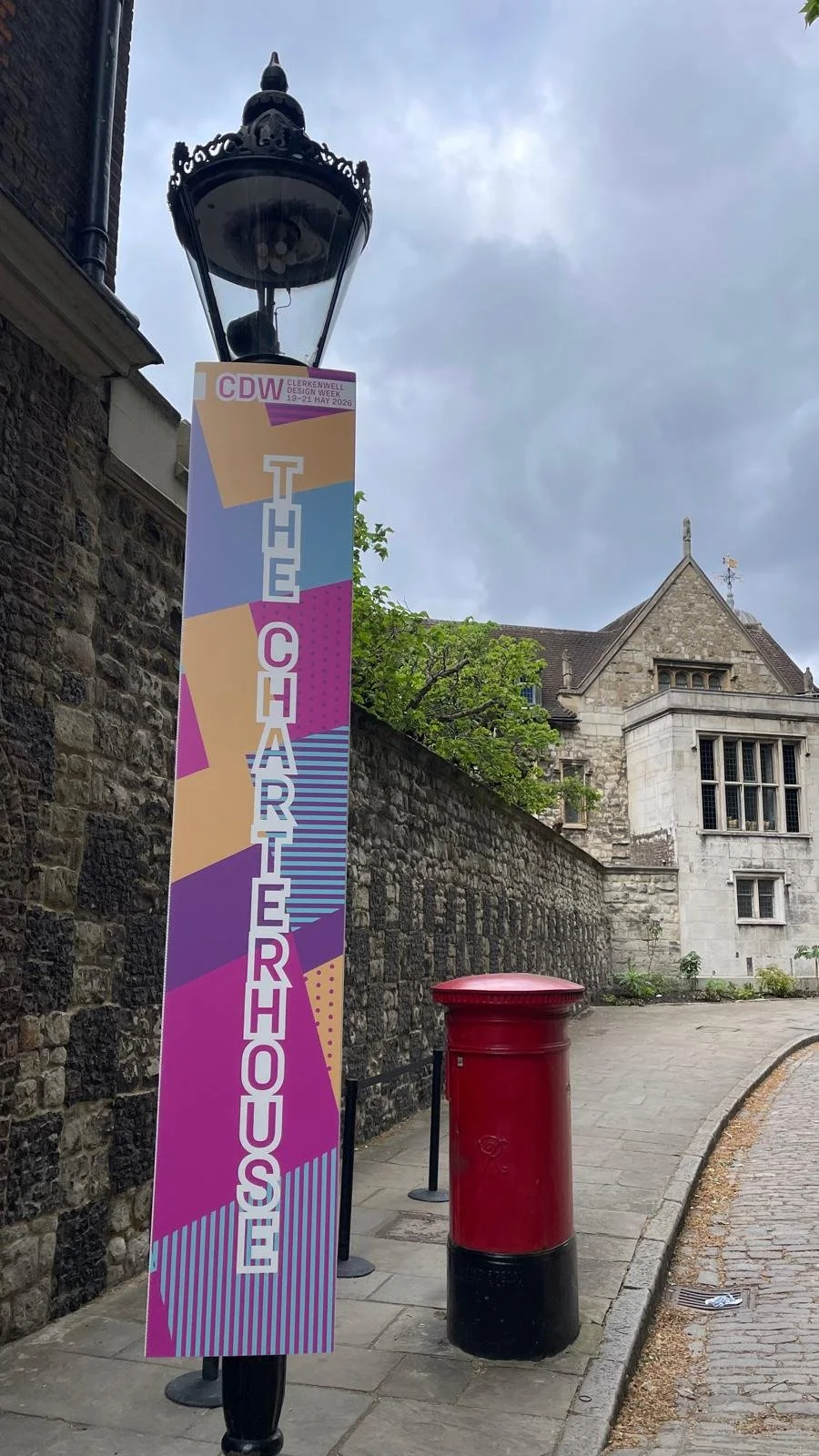
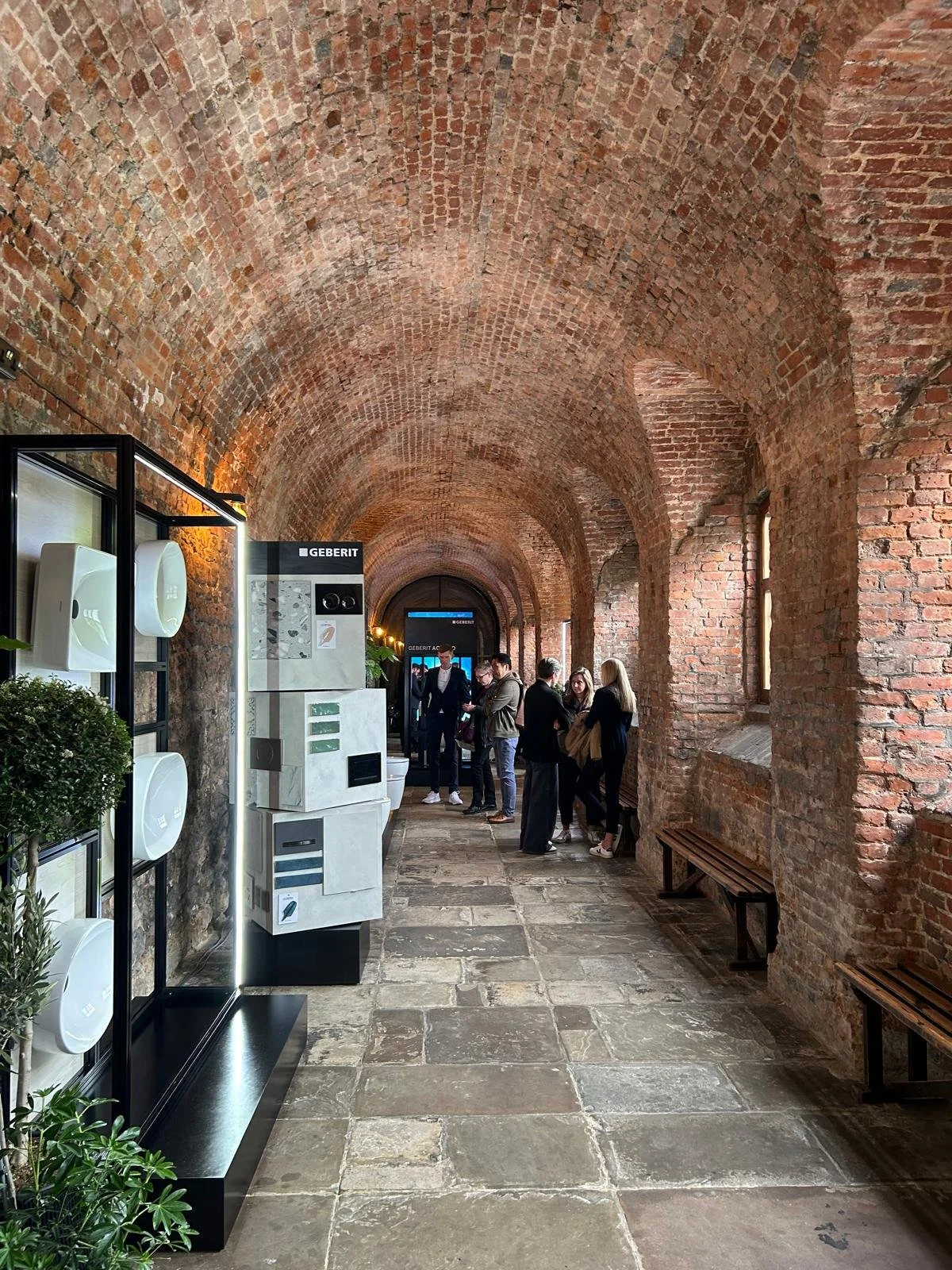
Charterhouse, now in its second year as a CDW venue, remained a standout, the kind of building that flatters everything shown inside it. Across the festival, brands also seemed better prepared, arriving with clearer stories and more considered activations. Here is what we kept talking about afterwards.
The Installations That Told More than a Sales Story
Eager sales teams, flooding the streets, hoping to convince you to purchase their wares, are a necessary part of Clerkenwell Design Week, and with a captive audience, it makes sense, of course. But working in the broader design space, we’re always looking for inspiration beyond the sale. Who told the best stories? Who made the narrative work, beyond the product?
Let’s start with Laufen, which took a spot in the incredible Charterhouse building, amongst a wealth of other bathroom brands. They told us about their new product range, made using next‑generation electric kiln technology. Having made the bold move to switch off their fuel-guzzling kilns in favour of a cleaner, greener alternative, the resulting collection felt genuinely forward-looking. Muted colours were carefully handled, and one particularly enchanting sink, designed in collaboration with Yves Béhar, created a whirlpool-like effect as water moved through it.
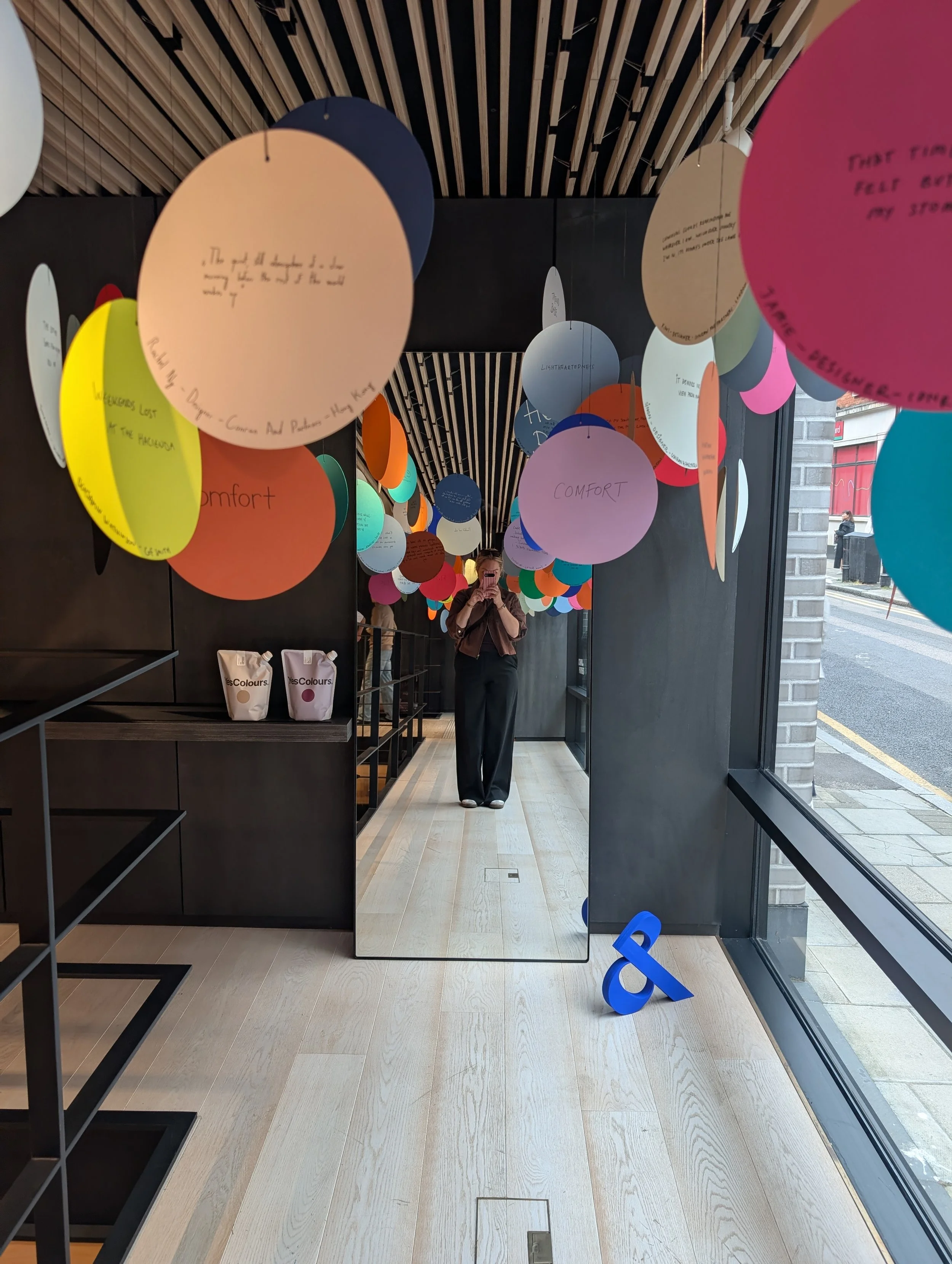
Yes Colours installation at Conran & Partners
YesColours took two opportunities to tell its brand story, through both Conran and Partners and J Adams & Co. Grounded in the emotional significance of colour, the Conran exhibition, “The Way You make Me Feel”, was a collaboration between Conran and Partners, Yes Colours and GF Smith, to explore how colour is far more than a decorative afterthought. It was unexpectedly moving, with visitors sharing memories tied to specific palettes and reflecting on how colour can shape mood, trigger memory and fundamentally alter the experience of a space. These reflections were suspended from the ceiling, allowing visitors to walk physically through those memories as they moved around the installation.
The J Adams & Co showroom offered a different but equally effective interpretation of the collaboration. Already a beautiful example of design meeting function, the space was carefully utilised to introduce three new shades joining the YesColours collaboration: Echo Blue, Oxide Red and Brick Yellow. Alongside the launch sat an engaging programme of talks and exhibitions with YesColours, centred on the relationship between colour and light. Handmade brass and glass luminaires sat instinctively against the palette’s architectural warmth, with every element contributing to a cohesive interior narrative rather than feeling like a standalone product display.
Finally, Bolon UK took their product “on the road”, or more specifically, to the pub down the road! Outdoor tables at the Sutton Arms sat on Bolon rugs, tables inside were covered in Bolon tiles, and the team themselves all had branded Bolon caps to identify them! While there were some new and interesting exhibits in their showroom, this felt like the more memorable gesture: a playful way to bring the brand beyond the showroom walls and into the everyday rhythm of Clerkenwell Design Week. A real-world example of how the brand can be used in practice, quite literally beneath the feet of the people who might later specify it.
Clerkenwell Design Week is never going to be like Milan Design Week, nor does it need to be. Its strength lies elsewhere: in proximity, conversation and the ability to encounter brands within the fabric of a real working neighbourhood. But as the festival matures, the brands that stand out are increasingly the ones telling richer, more meaningful stories. They are the names people continue discussing as they move from showroom to installation, and long after the week itself has ended.
What the Conversations at Clerkenwell Told Us
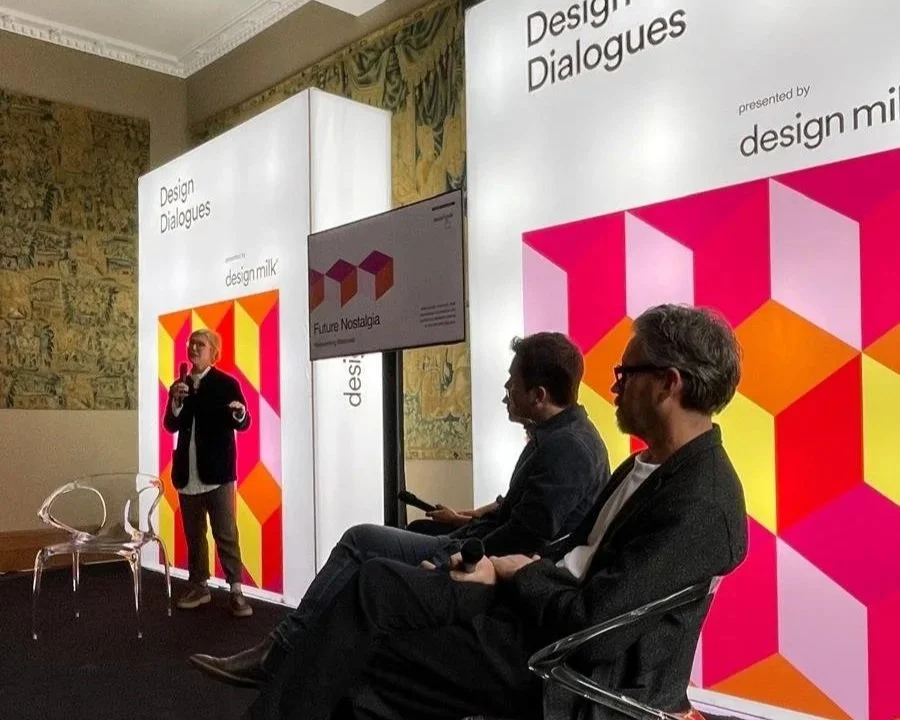
Two talks in particular stayed with us. The Future Nostalgia session, part of the Design Dialogues programme, made the case for circularity not as a bolt-on consideration but as a genuine starting point for design. The argument was simple, but it lingered: that existing architecture and materials should be part of the brief from day one, shifting the question from "what do we make?" to "what do we already have?"
Arthur Mamou-Mani showed this through eco-parametric structures built from recycled and biodegradable materials with a lifecycle designed to end in compost. It was a way of thinking about architecture as something embedded within an ecological system rather than simply placed on top of one. Tuckey Design Studio approached the idea differently with The Brickhouse, a project in which bricks salvaged from a demolished building were reincorporated into the new structure. Less manifesto, more quiet conviction, and all the more persuasive for it.
The Foster + Partners-led session on immersive technologies was, unexpectedly, less about technology than about restraint. The recurring question wasn't what these tools can do, but when they genuinely deserve to be used. There was a real sense that the conversation in this space is maturing: moving away from novelty and towards harder questions about empathy, accessibility, and what meaningful human benefit looks like in practice. Given how loudly AI is reshaping design right now, it felt like a necessary hour.
What CDW 2026 Told Us About Where Design Is Heading
CDW has a way of revealing where the industry's head is at, and this year the signal was fairly consistent. The things that stayed with us were not necessarily the biggest budgets or the boldest claims; they were the brands and practitioners who had clearly thought hard about why, not just what.
Whether that was a kiln switched off, a brick reused, or a technology deployed because it genuinely served someone rather than because it could be, the thread was the same. Fifteen years in, and the festival is asking better questions. So, it seems, is the industry.
