
Short-Form Video for Architects and Interior Designers
Are TikTok and Reels Worth the Investment?
For years, the architecture and design world built its digital presence around the still image. A beautifully lit exterior shot. A considered interior vignette. Perhaps a black-and-white site photograph with a short caption noting the location and the year of completion. It looked professional and considered. Now it mostly looks like every other studio's grid.
Reels and TikTok have become how a growing number of clients, particularly those under 40, first come across a studio. Not through Google or a curated Instagram feed but through video, often before they've registered the name of the practice at all. So the real question for architecture and interior design firms isn't whether video matters. It's whether the specific grind of TikTok and Reels is worth the time it demands, and whether either platform actually suits a brand that has spent years cultivating restraint.
Why does short-form video content keep being questioned?
Instagram is still the default platform for most design businesses, and there's a reason for that. It works as a portfolio, a search engine and a hiring tool at once. Industry benchmarking puts Reels at several times the impressions of a static post. But something has shifted, and Instagram and TikTok are now rewarding the same kind of content, and it isn't the hero shot that architects are used to.
Time-lapses of a build, walkthroughs narrated by the architect, thirty- to sixty-second clips, long or short clips that show a design problem actually being solved. These are consistently beating finished-project photography for reaching new audiences. The algorithm, it turns out, wants to see process and increasingly, so do clients.
What types of video content are actually working?
A handful of studios have figured this out, and the pattern is fairly consistent.
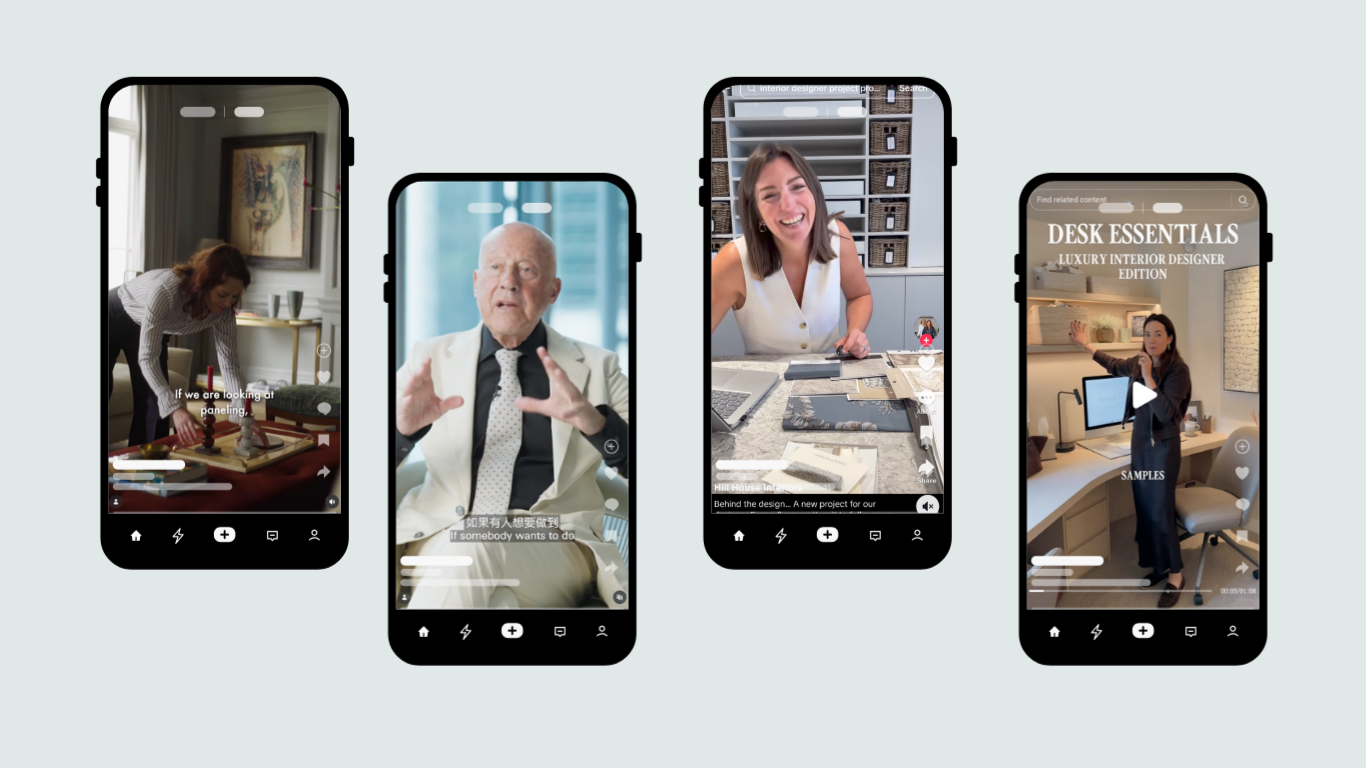
Some of the most useful short-form footage is already part of a project: a site visit, a material being tested, or a room before the finishing touches go in. A Reel can show a prospective client how decisions are made, while a finished photograph shows them the result. That opportunity applies just as much to an architecture practice as an interiors studio.
At one end of the scale, consider Lord Norman Foster, one of the world’s most recognised architects. To mark 40 years of the Hong Kong headquarters he designed, HSBC filmed him revisiting the building and explaining the ideas behind it. This is a major anniversary story with the production resources of a global client behind it, rather than a model for a weekly studio Reel. Its lesson is the value of hearing an architect speak about the decisions that shaped a building, decades after the work was done.
An Anna Haines Reel produced by House & Garden offers a different kind of opportunity. The publication brings its own editorial eye, production standards and audience to the designer’s work. Few studios can make every Reel to that standard, but a thoughtful collaboration can introduce both the project and the person behind it to people who may never have found the studio’s account. For day-to-day content, the more useful takeaway is simpler: give the designer’s perspective room alongside the finished images.
TikTok is being tested by several studios, such as Hill House Interiors. They often lean into the carousel option, as well as occasional videos to tell their brand story. Then there are up-and-coming designers such as Katherine Jane Design Studio, who use the platform more frequently to speak to camera and explain their process.
There's also a case for reusing the same footage across platforms rather than treating each one as a separate content operation, provided the edit actually changes with the platform rather than just the caption. A single walkthrough can be trimmed for pace and set to sound on TikTok, kept longer and more polished on Instagram, and reframed around the professional rationale for LinkedIn.
And occasionally, the highest-performing content isn't footage of a project at all. A few larger practices have had real traction just filming an architect talking, unscripted, about how they think. It travels further than another exterior shot, provided it sounds like an actual opinion rather than marketing copy.
The case against short-form video
The main case against comes down to resourcing. TikTok specifically rewards frequency, somewhere in the region of three to five posts a week to see genuine growth. For a small studio already juggling client deadlines, that's a real decision to make, not a side project someone picks up in a quiet week.
There's a brand question too. TikTok skews younger, and its whole format rewards speed and surprise, which sits awkwardly against the quiet confidence a lot of luxury and heritage practices have spent decades building. Chase the trend-driven, high-frequency version of the platform, and you risk diluting exactly the thing that made the studio worth considering in the first place. Some in the industry go further and argue TikTok simply doesn't suit professional branding in architecture at all, given the mismatch in audience and tone.
Why short-form video works for some and not others
TikTok tends to work best for younger or smaller studios still building a name, virtual designers whose business model is content-first anyway, and individual designers who are genuinely comfortable on camera. It works less well for established luxury or heritage practices, where exclusivity rather than reach is the point, and where one badly judged video can do more damage than a hundred unseen ones would ever do good.
Reels are a more palatable proposition. They're native to Instagram, a platform most design clients already treat as a portfolio and a search tool, so the commitment is smaller and the brand risk lower. For most practices, adding Reels feels less like a new strategy and more like an extension of what's already there.
A practical starting point
Nobody needs to overhaul their entire content strategy to find out if this is worth it. Repurpose existing site visit footage into one weekly walkthrough. Turn an existing 3D visualisation into a short Reel. Film thirty seconds of a material decision being made, nothing more polished than that. We'd recommend picking two platforms, showing up consistently for around ninety days, then deciding whether to expand. That gives a far more honest answer than either diving in headfirst or dismissing the whole idea after one awkward video.
And don’t forget about the text that goes with that. This is becoming increasingly important too.
The discoverability factor
The words accompanying a video matter too. A clear caption that names the project, its location, the type of space and the design decision being shown gives search engines more context than “a look behind the scenes”. Public Instagram and TikTok posts can appear in Google results, and AI search tools may draw on accessible web content when answering a question. That makes thoughtful copy part of discoverability beyond the feed, although no caption can guarantee that a post will be found or cited.
The Sandford verdict
Honestly, there's no universal answer here. Studios chasing reach and discovery, particularly younger practices, have good reason to take process-led video seriously. Studios trading on exclusivity and heritage may be better served staying selective. What matters more than the platform is whether the content actually reflects how a studio wants to be known, which is really a question for the wider PR and digital strategy, not just a decision about which app to open next.
Looking for support in strategising and creating content that gives you standout? Get in touch with us to discuss your needs.
