
A GEO guide to being found in the age of AI
The way we search for information has changed considerably over the past few years. While Google remains an important starting point, AI tools such as ChatGPT and Perplexity are increasingly becoming part of how people research businesses, explore ideas and make decisions. Rather than working through pages of search results, users can now ask detailed questions and receive answers that bring together information from a range of sources.
For architects, interior designers and design-led brands, this presents an interesting shift. A prospective client researching architects experienced in listed buildings, for example, might ask an AI tool for recommendations before ever visiting a practice's website. The information returned could draw on everything from the practice's own content to published projects, interviews and editorial coverage, creating an impression of the business before any direct contact has been made.
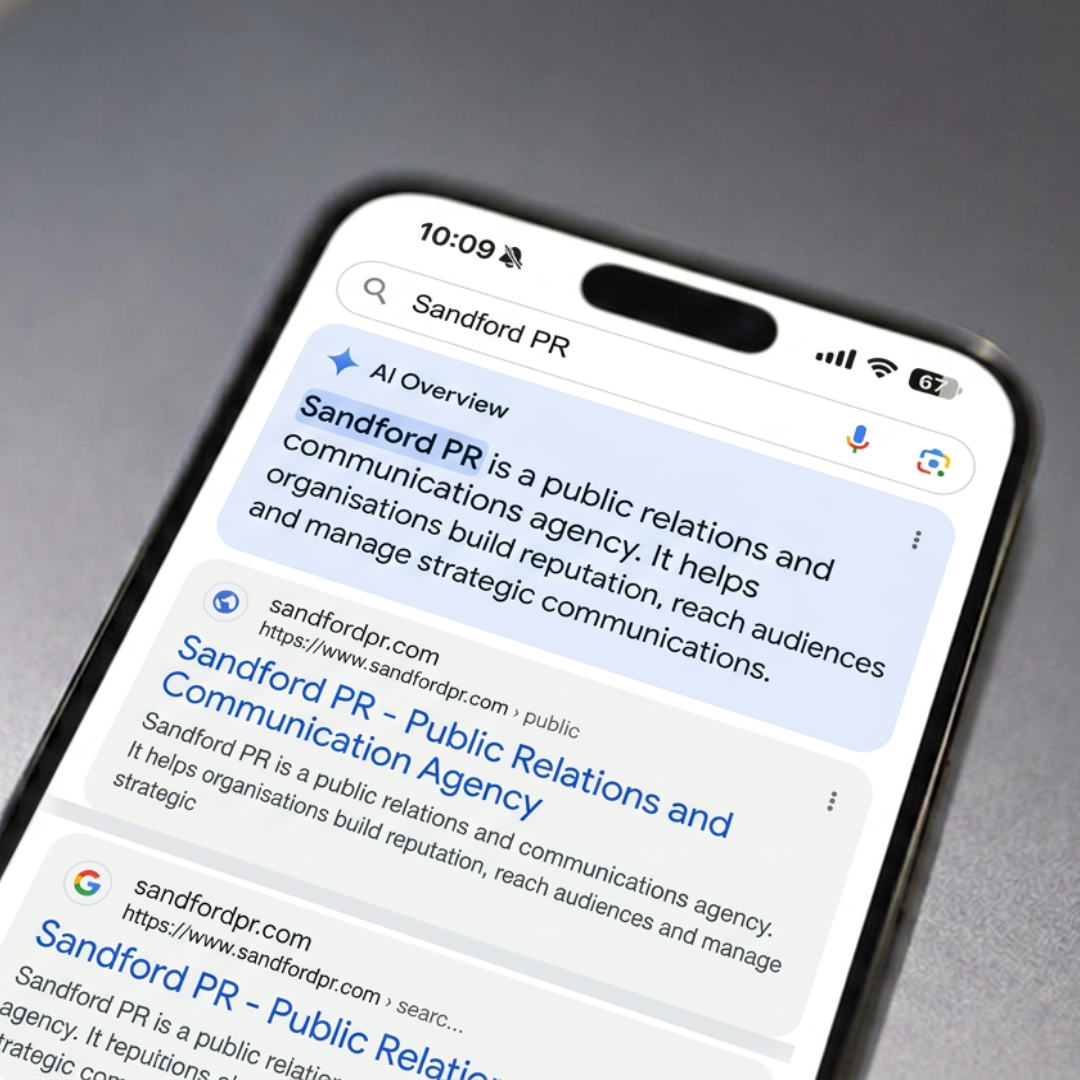
This changing landscape has given rise to a new area of digital marketing known as Generative Engine Optimisation, or GEO. Although the terminology may be unfamiliar, the principle is relatively straightforward: ensuring that a business can be found, understood, and accurately represented by the AI tools people are increasingly using to search.
For brands that have already invested in building a strong online presence, much of this will sound familiar. Good website content, a clear identity and a credible reputation have always been important, but the ways in which that information is discovered and presented are evolving. Understanding how AI search works, and where traditional SEO and digital PR fit into the picture, is becoming an increasingly useful part of a brand's communications strategy.
What is GEO?
GEO stands for Generative Engine Optimisation. Put simply, it is the process of helping your business become more visible, accurately represented and more likely to be referenced by AI-powered search tools.
You may also have come across the term AEO, or Answer Engine Optimisation. This focuses more specifically on making website content easy for search tools to understand and use when answering questions, but broadly the terms are used interchangeably.
The terminology is still evolving, and there is considerable overlap between the two. But the underlying principle is straightforward: making sure that when someone asks an AI tool a question relevant to your business, your brand has a better chance of being part of the answer.
Imagine a homeowner asking ChatGPT to recommend architects experienced in restoring listed properties in London, or someone researching British kitchen makers known for bespoke craftsmanship.
Would your business appear? Would the information be accurate? And what would the recommendation be based on? These are the questions that make GEO increasingly relevant.
How is GEO different from SEO?

Search Engine Optimisation (SEO) has traditionally focused on helping websites appear in search engine results. It involves everything from the structure and performance of a website to the quality of its content and the relevance of the links pointing towards it.
GEO builds on these foundations but considers how AI tools find, interpret and present information in both differing and similar ways.
While traditional search often encourages someone to visit a website to find an answer, AI tools may provide that answer directly, drawing on information from several different sources.
This changes the role of your online presence. Your website remains important, but so does the wider information available about your business.
A well-written project feature on an architecture website, an interview in a respected design publication or an informative article on your own site can all contribute to how a brand is understood and discovered.
SEO and GEO are not competing approaches. Good SEO helps make your website accessible and understandable, while GEO looks more broadly at how your business is represented across AI-powered search.
For most brands, the sensible approach is to strengthen both together rather than treat GEO as a separate exercise.
What makes a brand discoverable through AI?
There is no single trick to appearing in AI-generated answers. Different AI platforms use different sources and methods, and their recommendations can vary.
However, there are four areas worth paying attention to.
Making your website easy to find and understand
Before an AI tool can make use of information about your business, that information needs to be accessible.
This starts with many of the same principles that underpin good SEO: a well-structured, technically sound website, clear navigation, descriptive page titles and content that search engines can find and interpret.

For an architecture practice, for example, this might mean having individual project pages that explain the location, building type, design approach and particular challenges involved, rather than relying entirely on photography.
The technical side matters too. Websites need to load properly, present information clearly (to people and bots), and avoid unnecessary barriers that prevent search systems from accessing useful content.
Much of this is already familiar territory for anyone investing in good website development and SEO.
Creating content that answers real questions
Think about the questions your prospective clients ask before they get in touch.
How much does it cost to renovate a listed building? What is the difference between a bespoke and handmade kitchen? When should an interior designer become involved in a renovation? These questions are valuable starting points for website content.

AI search tools are designed to interpret questions and find information that helps answer them. Content that addresses a subject clearly, explains the relevant details and demonstrates genuine expertise is therefore particularly useful.
That does not mean turning every page into a list of questions and answers, but helping AI tools to extract standalone, clearly explained passages is key.
A thoughtful article, detailed project story or expert interview can be equally valuable, particularly when it provides information that is difficult to find elsewhere.
For design businesses, there is a wealth of knowledge that often goes unshared. This might be the thinking behind a project, the choice of materials, an unusual planning challenge or a particular approach to craftsmanship, all of which become useful content.
The aim is to make that expertise visible, without losing the personality and editorial quality that make a brand interesting in the first place.
Helping AI understand who you are
One of the less obvious aspects of AI discoverability is how well these systems understand a brand.
Do they recognise your business name? Can they identify your area of expertise, where you work and the types of projects you undertake? Can they distinguish your practice from another with a similar name? AI systems build their understanding from information available across websites, publications and other online sources, and consistency is important.
If your website describes your practice as specialising in heritage architecture, for example, but your project descriptions, social profiles and external coverage barely mention that expertise, the picture becomes less clear.
This is not about repeating identical wording everywhere. It is about developing a recognisable identity supported by genuine evidence.
A clear website, detailed project information, consistent business profiles and relevant editorial coverage all help establish who you are and what you are known for.
Building credibility beyond your own website
This is where digital PR becomes particularly interesting.
A brand can say a great deal about its own expertise, but independent recognition provides another perspective.

Coverage in respected publications, interviews with founders, expert commentary, and well-placed project features can help build a broader picture of a business.
For an interior designer, that might mean a project featured in House & Garden, an interview discussing their approach to colour, or commentary on a developing interiors trend. For an architect, it could be a detailed case study in an architecture publication or an expert contribution on the challenges of adapting historic buildings.
These opportunities have always been valuable for reputation and awareness. Now, they may also contribute to how AI systems encounter, and interpret and trust a brand.
Of course, a press mention does not guarantee inclusion in an AI answer, and equally, press coverage is never guaranteed! However, relevant, credible coverage creates more opportunities for a business to be discovered, and understood and validated beyond its own channels.
It also reinforces an important point: a strong reputation is built through what others say about you, not simply what you publish about yourself.
Which AI platforms matter?
The AI search landscape is developing quickly, with several platforms now influencing how people research businesses, products and services.
ChatGPT and Perplexity allow users to ask detailed questions, explore recommendations and follow up with further research. Google's AI Overviews and AI Mode bring AI-generated answers into the search experience, while Gemini, Claude and Microsoft Copilot offer other ways of researching and comparing information.
Although their approaches differ, many AI search experiences share a broad principle. They can retrieve relevant information from online sources and use it to help produce a response.
Some of these systems use a method known as retrieval-augmented generation, or RAG. Despite the technical name, the idea is relatively simple: the system looks for useful information before generating an answer, rather than relying solely on what it has previously learned.
This is one reason clear website content and credible external coverage matter.
These tools are also increasingly good at understanding natural language and context. A search for 'an architect experienced in sensitive contemporary extensions to period homes' is more specific than a simple search for 'London architect'.
For businesses, this makes it important to explain their expertise in the language their prospective clients actually use.
It is also why filling a website with repeated keywords is unlikely to be a useful long-term strategy. Clarity, relevance, and substance are far more valuable.
What about AI agents?
AI is beginning to move beyond simply answering questions.
AI agents are systems designed to carry out tasks on someone's behalf, sometimes involving several steps. Depending on the tool and the permissions provided, that might include researching options, comparing services, visiting websites, or completing forms.
Imagine asking an AI assistant to research suitable interior designers for a country house renovation, compare their experience and prepare a shortlist. Rather than simply returning a list of search results, an agent could potentially undertake much of that research itself.
The technology is still developing, and the way people use these tools will continue to change. But it points towards a future in which businesses need to be accessible and understandable not only to people browsing websites, but also to AI systems navigating them.
For now, the fundamentals remain familiar: clear information, an accessible website, credible content and a well-established reputation.
Why GEO and digital PR belong together
For businesses in architecture, interiors and design, discoverability has never depended on a single channel. A prospective client might first encounter a practice through a magazine feature, recognise its work on Instagram, visit its website and eventually make an enquiry months later.

AI introduces another route into that journey. It also brings renewed importance to the connections between a brand's website, its content, its social presence and the editorial coverage it earns.
At Sandford, we see GEO as a natural extension of the work we already do across PR, digital marketing and search.
Good communications have always been about helping the right people understand what makes a business worth knowing. AI discoverability asks us to consider how that same information is being found and interpreted by a new generation of search tools.
That means looking beyond individual rankings or mentions to understand how a brand appears across the wider digital landscape, where the gaps are and what could be improved.
For some businesses, the priority may be strengthening their website content. For others, it could be developing a clearer area of expertise or building greater recognition through relevant editorial coverage.
There is no universal formula, and no guarantee of appearing in every AI-generated answer. But there is a great deal that businesses can do to make themselves easier to find, understand, and trust.
Curious about how your business appears in AI search?
Our AI Discovery Audit looks at how your brand is being found and described across AI platforms, how it compares with relevant competitors, and where there may be opportunities to improve its visibility.
Get in touch with Sandford to find out more.
