
The Archive vs. the Algorithm: Why Fabric Designers Keep Returning to the Past
Digital programming and AI technology now enable the generation of thousands of textile designs in seconds. With just a few prompts, designers can conjure an endless library of florals, stripes, and geometrics that once took days, or even months, to sketch, refine, and print by hand. Inspiration has never been faster or more accessible.
This acceleration mirrors our own landscape: content is produced and distributed at unprecedented speed. Yet as messaging becomes increasingly accessible, the challenge shifts from creation to connection. The question is no longer how quickly something can be made, but how meaningfully it resonates. This parallel makes the design world’s return to archives particularly relevant, offering a lens through which we can rethink originality, storytelling, and long-term brand value.
The archive quietly endures as a vital tool among industry leaders. Recent presentations at the likes of Paris Déco Off and London Design Week have revealed a counter current to this fast-paced creation, with industry leaders revisiting historic prints, retracing iconic motifs through reimagined iterations, and drawing upon centuries-old sketches, fabric swatches, and traditional printing methods.
Prints once confined to museum drawers have been catapulted to the forefront of contemporary collections, raising a compelling question of: Why, in an era so driven by algorithmic creation, are designers continuing to look to the past?
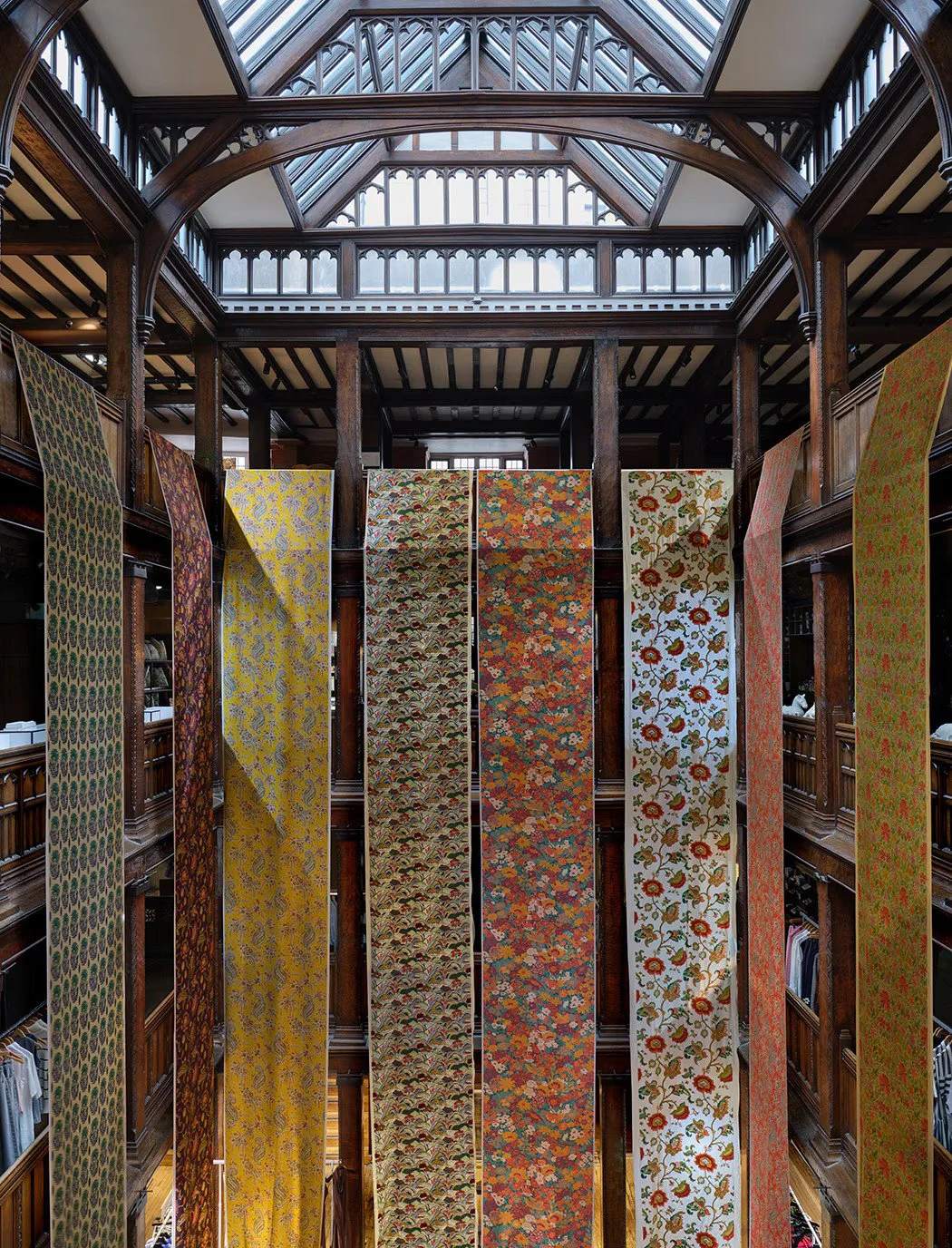
The House of Liberty collection by Liberty Fabrics (Image courtesy of Liberty)
Archives as Creative Laboratories
For many designers, archives are not merely repositories of objects, but instead, function as cabinets of curiosities, offering inspiration as modern-day creative laboratories.
Unearthing unseen fabric fragments and rare sketches as the primary source of inspiration for new collections, designers are increasingly platforming archival motifs, reworked for contemporary audiences through refreshed colour palettes and scales, ensuring the legacy of artefact prints through reinterpretation.
Recent collections illustrate this approach, from Samuel & Sons x Martin Brudnizki’s Romaunt collection, celebrating the Renaissance art movement, to Morris & Co’s collaboration with the Huntington Library and IKSEL’s Patinir Landscape, all revealing retrospective takes on designs dating as far back as the 16th century.
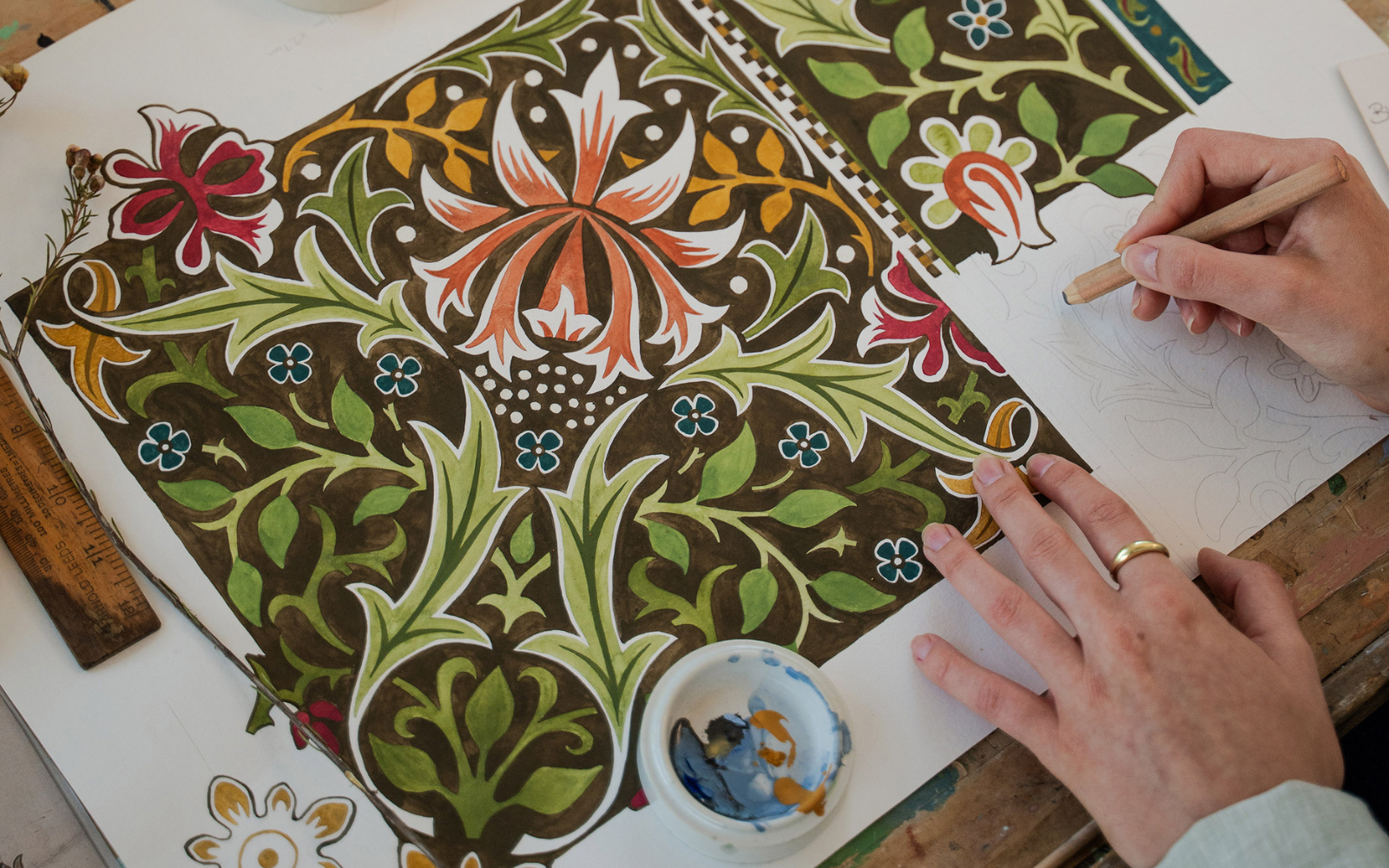
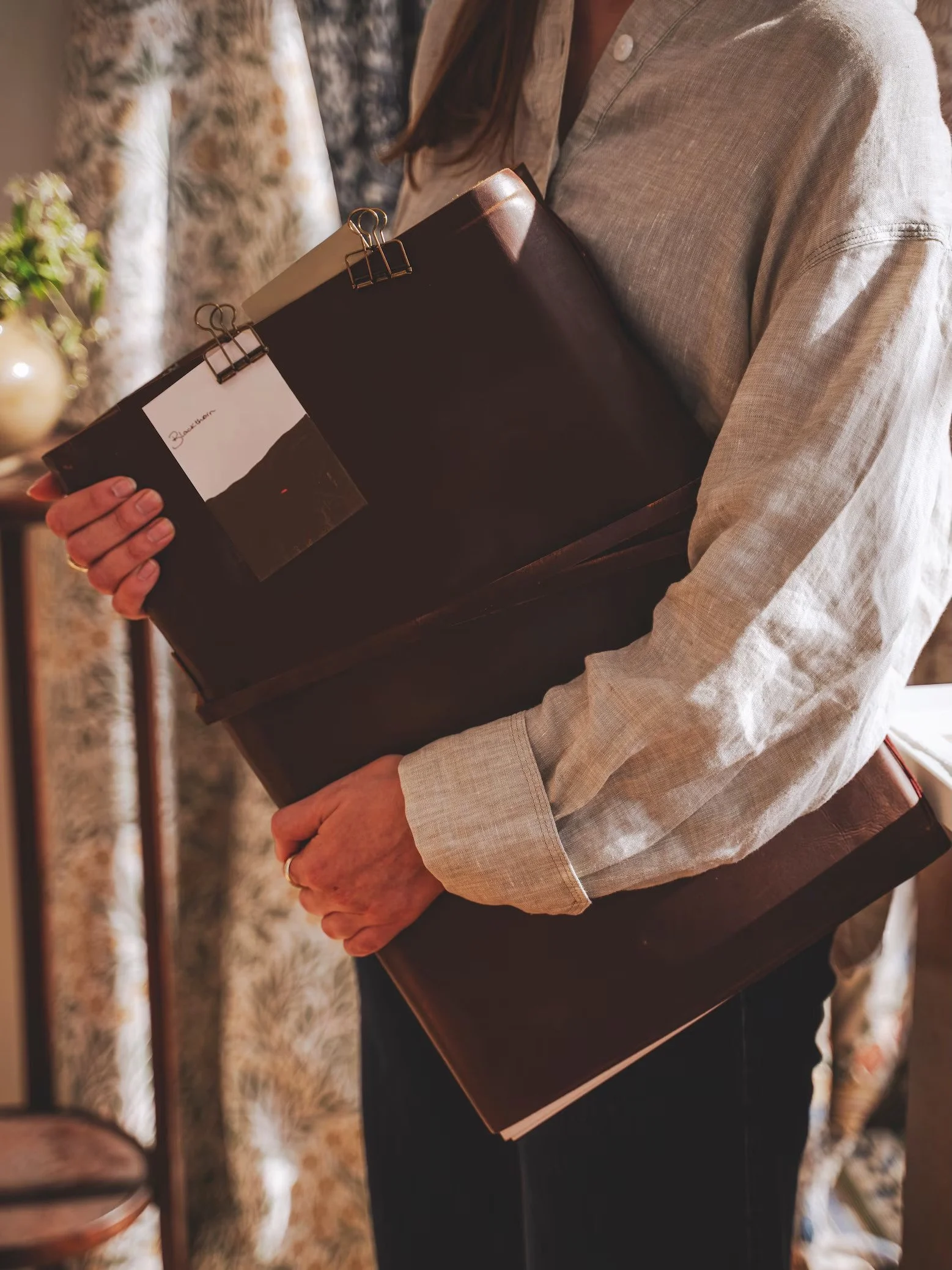
The Unfinished Works collection by Morris & Co x The Huntington (Image courtesy of Morris & Co)
Heritage as creative material is far from a new concept. Fashion houses have long turned to their archives for inspiration: from Gucci’s revival of its iconic Marchmont print for contemporary silhouettes to Hermès’ continued celebration of its signature saddlery-inspired motifs.
Archives have become more than visual inspiration, positioned as tools for narrative-building, preserving cultural memory, and strengthening brand longevity. In communications terms, they allow brands to tell richer, more layered stories that connect audiences emotionally across time.
The Regency Revival
Bridgerton-era florals, delicate botanicals, and intricate twills have found new life on runways and fabric emporiums alike. Designers are reimagining Regency-style motifs not just as a whimsical nod to contemporary culture, but as a lens through which to explore elegance, pattern, and colour for modern audiences.
Liberty’s Bridgerton Collection takes a direct approach, presenting a capsule that weaves the house’s celebrated heritage with the series’ Regency aesthetic. The designs draw on the romantic and refined visual language of the period, translating it into prints suited to contemporary interiors and fashion. Meanwhile, Sanderson’s latest interpretations of heritage florals and elaborate chintzes also lean into this renewed appetite for Regency-inspired decoration.
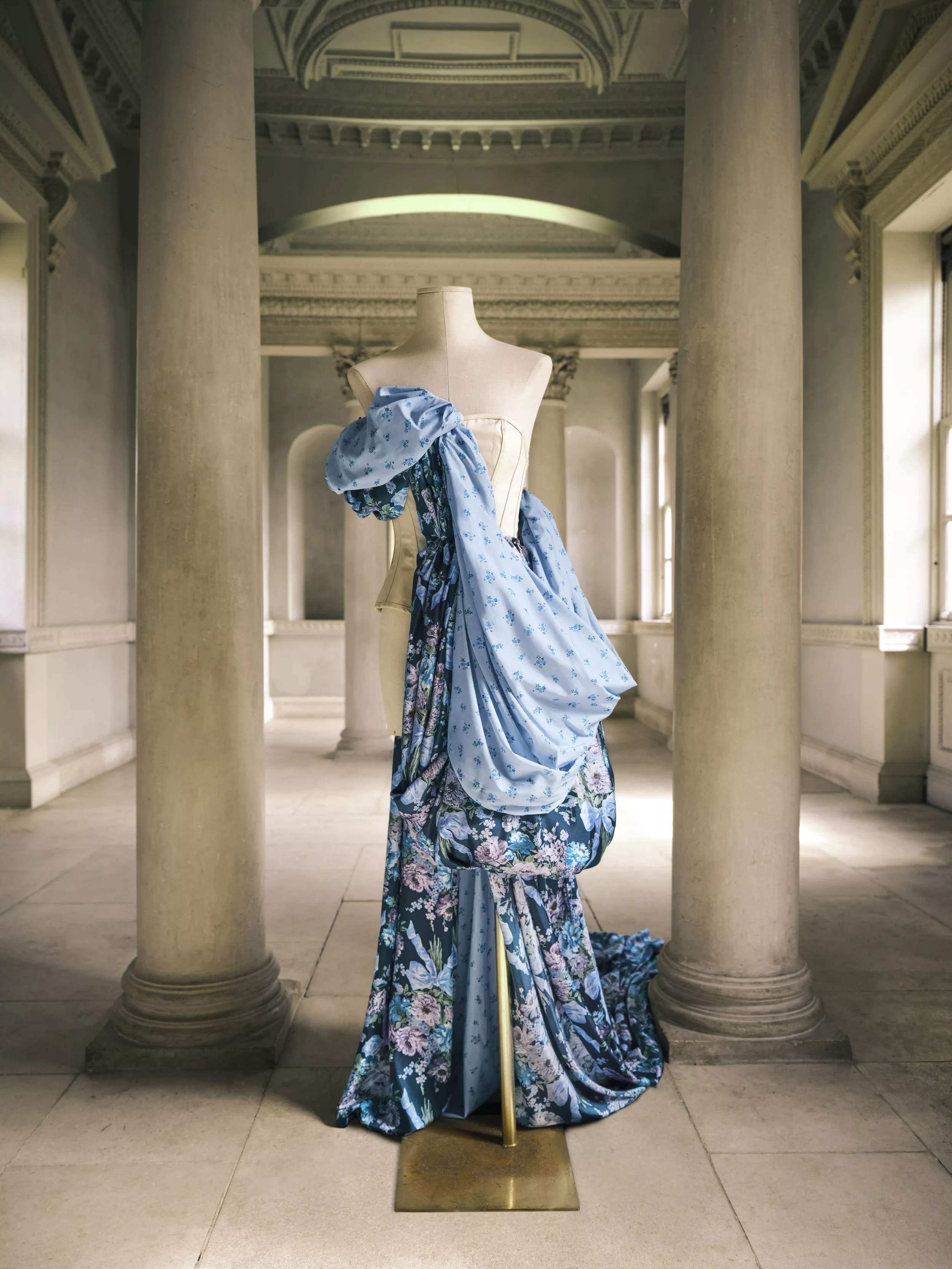
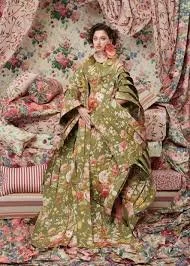
(L to R) The Bridgerton Collection by Liberty Fabrics (Image courtesy of Liberty); Sanderson x Damian Foxe (Image courtesy of Sanderson)
Connecting customers with the historical roots behind the Bridgerton aesthetic reminds us that while digital speed can aid novelty, narrative and emotionally charged design endure as a consistent thread. While algorithms enable speed and variation, the archive provides context, meaning, and emotional resonance; elements that ensure designs endure beyond trend cycles.
A Compass for Innovation
While nostalgia fuels much archival inspiration, innovation holds equal weight. By rediscovering historical techniques, forgotten motifs, and patterns that once defined eras, designers find both emotional and aesthetic resonance while pushing boundaries through contemporary reworking and reinterpretation - demonstrating that brand authority is built not just on history, but on the ability to translate heritage into contemporary relevance.
Combining archival artefacts with digital technology, designers experiment with scale, colour, and application, creating refreshed prints ready for modern production. Archives provide context and constraints, allowing experimentation to feel meaningful rather than random. In this way, the past becomes a springboard for creativity: designs are faster to conceptualise than ever, yet imbued with depth, emotion, and narrative weight; qualities no algorithm alone can replicate.
In fabric design, the past isn’t a dead end; it’s a narrative engine, and one of the most powerful tools in an increasingly algorithmic world.
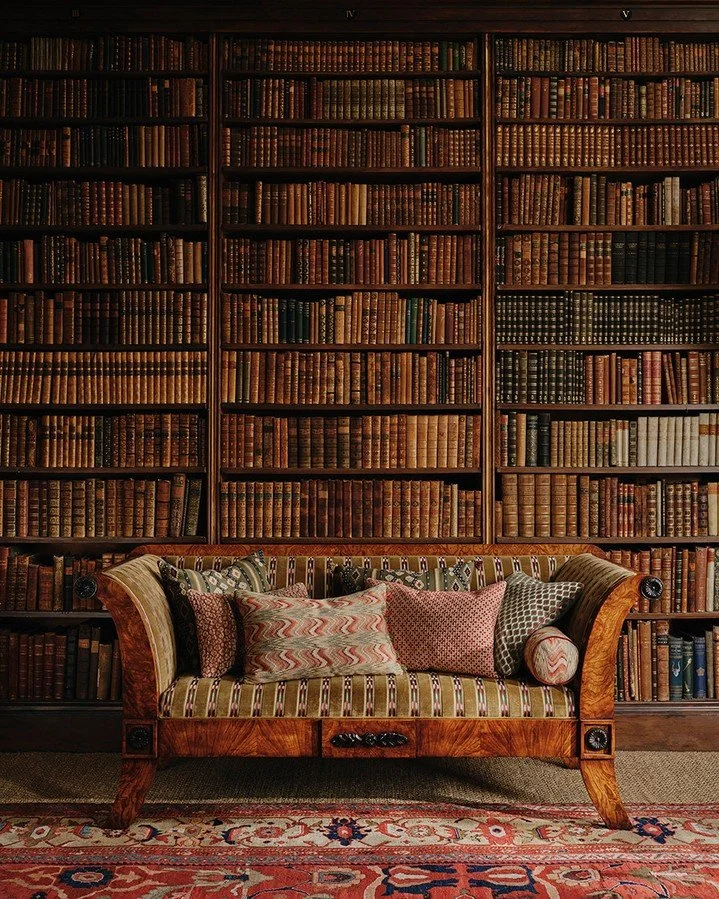
Image courtesy of Colefax & Fowler
